
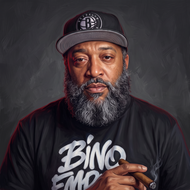

The Hidden Heart: How the Collapse of the Old-School Black Church Hollowed Out American Christianity—And Why the Standard Never Moves
If you spend any time on Angryman’s channel, you already know the foundation: The Standard is the standard. And for a man, the mandate never changes: Build. Protect. Lead.
One of the recurring themes Angryman breaks down on this platform is the degradation of the modern Black church. Now, I am coming at this as a Gen X, white-presenting man with Native and mulatto mixed blood. Some folks might wonder why a guy who looks like me has a vested stake in what happened to the Black church.
The answer isn't theory to me—it is in my bloodline.
My grandfather was born on December 17, 1920, on a dirt floor in a sharecropper’s cabin in Tahlequah, Oklahoma, to a Black Cherokee/Muskogee woman and a Cajun man. In 1937—when he was just sixteen years old, right in the middle of the Jim Crow South—he got caught in a cotton gin accident that nearly tore him apart and killed him. A Black co-worker—a faithful Black churchman—pulled him out, saved his life, and right there in the blood and dust, led my grandfather to the Lord. Shortly after, my grandfather walked into a tent meeting and was baptized in the Washita River just north of Virden, Oklahoma, by a Black preacher.
And that same Black churchman wasn't done standing in the gap for our family. Two years later, in 1939, when my Uncle Marvin Glenn was just ten years old, he got bucked off a horse and the horse stepped right through his right lung. That very same Black man loaded my bleeding ten-year-old uncle into the back of his Model A pickup and rushed him all the way to the hospital in Anadarko, saving his life too.
To my family, that Black man wasn't some abstract social issue—he was just the man down the dirt road. Back then, hardworking people trying to survive on dirt floors and hard labor couldn't afford to be hateful; you relied on your neighbor, and he relied on you.
That Black churchman set off a chain reaction that lasted over half a century and changed our entire bloodline. Through my grandfather's witness, all of his siblings were saved, and our entire family traces our faith straight back to his faithfulness. My grandfather became a fire-and-brimstone country preacher, a farmer, and a mechanic. He carried the unvarnished Gospel and hard truth all over New Mexico, Texas, and Oklahoma—preaching to cowboys, Mexican oil field hands, Black men, and ranchers alike.
Along the way, that sharecropper's son sat and labored alongside heavyweights of the faith like Dr. William D. Wyatt, Harry P. Stagg, Alan Dale Danielson Sr., Claude Cone, and Billy Graham. He was right there in the thick of real, biblical brotherhood when it actually cost something.
In June 1953, a Black Baptist missions leader named Annie Filmore rode a Greyhound bus across the country to attend a conference at the newly opened Glorieta Baptist Assembly in New Mexico, in the Southern Rockies northeast of Santa Fe, at the Civil War battle site of Glorieta Pass—answering Harry P. Stagg’s public call for true Christian fellowship. When camp officials tried to price her out to enforce segregation, a 23-year-old Dale Danielson stepped up and brought Annie Filmore right into his family's private cabin with him and his mother, quietly breaking down segregation at Glorieta through sheer Christian conviction while my grandfather stood right alongside him in that circle of believers (Boomers, civil rights was not your thing). And when my grandfather finally retired from the pulpit in 1988, he didn't go sit in a rocking chair. He went out planting churches on Native reservations all across western New Mexico and eastern Arizona.
All of that—two lives physically pulled from death, every sibling saved, every soul won, every barrier broken in Christ, every church planted, every family anchored across generations—happened because a Black churchman in Oklahoma had the courage, the faith, and the spiritual backbone to save a sixteen-year-old kid from a cotton gin, rush a ten-year-old boy to Anadarko in a Model A pickup, and point our family to Christ, while a Black preacher baptized my grandfather in the Washita River.
That is why I have a stake in this. Because in the past, the old-school Black church wasn't some separate, side-street religion. It was the hidden heart of the entire American evangelical body, and the key to showing my family the Lord. When that heart was compromised and ripped out, it didn't just devastate Black families—it triggered a spiritual rot that eventually hollowed out the entire American church, white and mixed congregations included.
The Gen X Baseline: What Our Grandparents Stood On
Both Angryman and I are Gen X. We are old enough to remember the churches our grandparents built and took us to—and if you walked into an old-school Black Southern Baptist church, a traditional Methodist church, or an early Assemblies of God congregation, and then walked across town into an old-school white or mixed country Baptist church, you found the exact same spiritual backbone.
There was no fog machine. There was no motivational TED Talk. There were no pastors begging you to "sow a seed" so they could buy another luxury car.
Those churches—Black, white, and mixed—were uncompromising Gospel churches. They stood squarely on Sola Scriptura: the Bible alone as the final, unmovable authority. They were pro-Israel, grounded in shared covenant commonality and dispensational covenant theology, understanding God’s promises from Genesis to Revelation without twisting scripture to fit political fashion.
They were fiercely traditional and conservative. They were pro-marriage and pro-family, where men were expected to lead their households and women respected order. They were unapologetically anti-abortion and held the clear biblical line against homosexuality. They were standard-bearers who practiced real church discipline and strict discipleship. They were mission-minded, taking the Great Commission seriously. And despite the ugly legal segregation outside the doors during Jim Crow, inside the true Gospel church, believers were color-neutral at the foot of the cross. A brother or sister in Christ of any color was blood family—just like that Black churchman, that Black preacher in the Washita River, and my family in 1930s Oklahoma, and just like Annie Filmore, Dale Danielson, and my grandfather at Glorieta in 1953.
The Crucible of Reconstruction and Jim Crow
Think about what that standard survived. During Reconstruction and the brutal reality of the Jim Crow South, the Black church—across Baptist, Methodist, and Holiness/Assemblies of God lines—was the institutional anchor that kept communities alive. When the legal system refused to protect them, the church was the schoolhouse, the mutual aid society, and the moral court.
It demanded reverence, self-reliance, clean living, and masculine responsibility. In fact, its moral rigor and devotion to God were so undeniable that even hardened Jim Crow Southern racists often held a secret, grudging respect for the Black church's example. External oppression, poverty, and hostility couldn't break it.
The Proof of Power: Dietrich Bonhoeffer and the Black Baptists
If you want wider historical proof alongside my own family’s legacy that the old-school Black church was the beating spiritual heart of American Christianity, look at Dietrich Bonhoeffer.
In 1930, Bonhoeffer—a young German pastor and theologian—came to the United States to study at Union Theological Seminary in New York. What he found in the white liberal academic circles there was dead, watered-down, and spiritually bankrupt. He didn't find living Christianity until he stepped into the Black Baptist churches—first in Harlem, and later traveling down through the American South.
Bonhoeffer was mentored, taught, and sharpened by Black Baptist pastors, clergy, and deacons. He watched people living under real oppression hold fast to unvarnished scripture, fierce prayer, and uncompromising obedience to Christ. That fire forged his spine. Bonhoeffer went back to Germany, stood squarely against Adolf Hitler, and ultimately gave his life as a martyr fighting to save the Jewish people from extermination.
Stop and let the weight of that sink in. In the 1930s, the Black Baptist church was so spiritually potent that it forged a German martyr who died fighting Hitler to save the Jews—and in that exact same decade, a Black churchman and a Black preacher in Oklahoma saved my grandfather and my Uncle Marvin Glenn from death, forged a sixteen-year-old sharecropper's son into a fire-and-brimstone preacher who saved his siblings, stood with Dale Danielson and Annie Filmore at Glorieta, sat with greats like Billy Graham and Dr. William D. Wyatt, and spent fifty years evangelizing cowboys, oil hands, ranchers, and Native reservations.
Now look at how fast and how far that standard collapsed.
Phase 1 of the Ripple: Ripping Out the Heart (1960s–1970s)
What Jim Crow chains, cotton gins, and poverty could never destroy, the secular left infiltrated and dismantled starting in the 1960s and 1970s.
By trading eternal, Gospel-first conviction for secular political alignment, the pulpit was slowly hijacked—and the hidden heart was ripped right out of the evangelical body. Once that anchor was cut, the collapse inside the Black church happened in rapid succession:
• Umbilical Liberation Theology: The Gospel of salvation and personal transformation was swapped out for perpetual racial grievance—mostly rooted in past injustices, now recycled as an all-purpose excuse for modern debauchery and zero accountability.
• The Destruction of Household Order: Hand-in-hand with Lyndon Johnson’s "War on Poverty," the state replaced the father in the home. Masculine leadership was pushed out of the pews, replaced by disorderly women running the house and the church while men were sidelined.
• Weak Simp Pastors and Loud-Suited Hustlers: Instead of shepherds forged in scripture, the pulpits filled up with weak Boomer simp pastors afraid to confront sin, alongside prosperity-gospel pimps in loud suits fleecing their own congregations.
• Blasphemous Coalitions: Within a few decades of mentoring Dietrich Bonhoeffer, large swaths of the compromised Black church formed an unthinkable, blasphemous political coalition with the rainbow movement—and worse, embraced Margaret Sangerism, celebrating the very abortion industry specifically designed to quietly 1940s German-style extirpate their own ethnicity out of existence, along with their red-skinned brothers.
• Leftist Antisemitism and Political Prostitution: Churches began hosting and celebrating secular politicians who champion abortion, sexual confusion, and anti-biblical policies, while absorbing the secular left’s growing antisemitism—the exact opposite of the pro-Israel, covenant-minded faith of our grandparents.
• Death of Discipline: Strict discipleship, church discipline, and masculine standards vanished completely.
Phase 2 of the Ripple: The Contagion Spreads to the White Church (1980s–1990s)
Here is the part a lot of white evangelicals don't want to admit: once the hidden heart was hollowed out, the exact same disease spread straight across the wider white and mixed American church starting in the 1980s and 1990s.
Different music, different demographics, exact same rot:
• The "Seeker-Friendly" Hustle: Sola Scriptura and hard biblical preaching were traded for smoke machines, skinny jeans, and business-model churches obsessed with how many tithers they could cram into an auditorium on Sunday morning.
• Pimp and Simp Preachers: Just like the Black church, the white evangelical world produced its own crop of celebrity prosperity pimps and soft, apologetic simp pastors who refused to offend the culture.
• Compromise on Life, Family, and Israel: What started as cowardly silence turned into tolerance, and eventually outright endorsement—churches waving the rainbow flag, compromising on Margaret Sanger’s abortion agenda, and drifting into the same replacement theology and growing antisemitic attitudes creeping across the modern left and right.
• Abandonment of the Standard: Church discipline disappeared. Discipleship turned into shallow small-group self-help. The Great Commission was replaced with brand-building.
The Wilderness and Coming Home: Why Angryman’s Journey Makes Sense
When you look at that wreckage across the entire modern church, Angryman’s own spiritual journey makes total sense.
Raised Southern Baptist on that old-school foundation, he watched the modern church go soft, emotional, and undisciplined. So like many strong men starving for structure, he looked at the Nation of Islam. Why? Because while modern churches were coddling excuses, the NOI was preaching clean living, self-reliance, suits, order, and men taking responsibility.
But a man grounded in truth eventually tests everything against the real standard. Seeing that the NOI wasn't the truth for him, he didn't stay lost in the wilderness—he returned full circle to Independent Baptist Fundamentalism.
And why does that lane matter? Because Independent Baptist Fundamentalism is one of the last remaining strongholds that still mirrors the uncompromising, scripture-first backbone of our grandparents' churches—Black, white, and mixed. No corporate denominational boardroom dictating doctrine. No bending the knee to rainbow politics or feminist disorder. Just the Book as it stands, the Great Commission, the traditional family, and personal accountability before God.
The Standard Never Moves
You cannot Build, Protect, and Lead on sand. You cannot build strong households on watered-down theology, government dependency, or emotional hustle.
My grandfather, my Uncle Marvin Glenn, and the Black churchman and Black preacher in 1930s Oklahoma—who pulled my grandfather from a cotton gin, rushed my ten-year-old uncle to Anadarko in a Model A pickup, led my grandfather to Christ, and baptized him in the Washita River—lived out the real thing. Because of those faithful brothers, an entire family line was redeemed, segregation was broken at Glorieta through Gospel conviction rather than political theater, churches were planted, and the truth echoed across the Southwest. They didn't make excuses. They stood on the Book, worked with their hands, and carried the truth everywhere they went.
The modern church—Black and white—moved the goalposts. God didn't. The Standard is the standard.
Question for BINO Nation: For those of you who grew up in the old-school church, what was the exact moment you realized the modern pulpit had traded biblical discipline for cultural hustle—and where do men go today to find that real standard?
The late Dr Chuck Missler said the future of the Church is the living room, with the man of the house as PASTOR. We build it again, ourselves.

In this video, The Angryman shares why he's excited to be part of the Locals community. He talks about how Locals provides a platform for creators to connect with their audience and build a community based on shared interests and values. The Angryman emphasizes the importance of free speech and the ability to express one's opinions without fear of censorship, which is why he feels Locals is the perfect fit for him and his followers.
He also discusses how being on Locals allows him to have more control over his content and how it's presented, as opposed to being at the mercy of algorithms and constantly changing social media policies. The Angryman believes that Locals offers a more sustainable model for content creators, allowing them to focus on creating high-quality content for their audience.
Throughout the video, The Angryman encourages viewers to join him on Locals and be a part of the community. He shares the benefits of membership, such as exclusive content, early access to ...
The Hijacked Legacy: Annie Filmore, Black Conservative Giants, and the Rotten Saints of the Secular Left
Over the last three essays, we have traced a straight line from the dirt floors of 1930s Oklahoma, up to Glorieta Pass in June 1953, and right into your own living room today.
We looked at how the old-school Black church was the hidden, uncompromising heart of American Christianity—and how secular politics hollowed it out before that same rot infected the white evangelical church. We walked through the true story of Annie L. Filmore riding a Greyhound bus across the country in 1953 to dismantle Jim Crow through pure Gospel conviction alongside Dale, Margaret, and Betty Danielson, Dr. William D. Wyatt, Dr. Harry P. Stagg, and my grandfather. And we laid out the blueprint for men in BINO Nation to Build, Protect, and Lead by taking back the pulpit at their own kitchen tables.
Before we close out this series, there is one more lie from the modern culture that needs to be dismantled—especially for a generation raised on ...
The Living Room Pulpit: Why the Next Great Awakening Starts When Men Take Back the Head of the Table
Over the last two posts, we have walked through the wreckage of the modern American church—and looked at the real thing that preceded it.
In the first essay, we laid out how the old-school Black church was once the beating, uncompromising heart of American Christianity, and how secular politics hollowed it out before that exact same rot spread straight across the white and mixed evangelical world. In the second essay, we looked at what real, scripture-first backbone looked like on a mountain pass at Glorieta in June 1953—when Annie Filmore, Margaret, Dale, and Betty Danielson, Dr. William D. Wyatt, Dr. Harry P. Stagg, and my grandfather dismantled Jim Crow through raw Gospel conviction rather than political theater.
And we contrasted those giants of the faith with the modern circus: Hillsong’s celebrity VIP nightclubs, skinny-jeaned pastors like Carl Lentz and Brian Houston drowning in scandal, and loud-suited ...
.
The Woman Who Broke the Pass: A Deep Dive into Annie Filmore, Glorieta 1953, and Real Christian Conviction
In my last post, I laid out how the old-school Black church was the hidden heart of American evangelicalism—and I briefly mentioned a Black Baptist missions leader named Annie L. Filmore alongside Dale Danielson and my grandfather at Glorieta, New Mexico, in June 1953.
Today, we are going deep on Annie Filmore. Because if BINO Nation wants to see what Sola Scriptura, the Great Commission, and real, unfiltered Christian backbone looked like before Boomer politicians and secular hustlers turned race into a permanent division industry, her full story deserves the spotlight.
And for me, the people who stood beside her on that mountain pass aren't dusty names out of a history book. Betty and Dale Danielson, Dr. William D. Wyatt, and Dr. Harry P. Stagg weren't just figures to me—they were my grandfather’s friends, my dad’s friends, and MY BOYHOOD/TEENAGE FRIENDS.
Dr. Harry P. Stagg was a warrior of the faith in his...


